October 2026 Newsletter
Domestic Violence Awareness Month:
Supporting Families, Protecting Keiki
October is Domestic Violence Awareness Month, an opportunity to raise awareness about family violence and the importance of ensuring Hawaiʻi’s keiki and families have safe, supportive environments in which to grow and develop.
During the first five years of life, children depend on safe, stable relationships with parents and caregivers to support their healthy development. Exposure to violence, abuse or neglect during these critical early years can have lasting effects on their emotional well-being, brain development and ability to form healthy relationships.
In Hawaiʻi, 919 children were confirmed victims of child abuse and neglect in 2025. Of those, 338 were children ages 0 to 5, the largest age group among confirmed victims. Young children can also be affected by violence between adults in the home. Research shows that among families experiencing intimate partner violence, 70% to 80% report violence occurring within the first year after a baby’s birth. These findings highlight just how vulnerable our youngest keiki can be and why reaching families early is so important.
Preventing family violence begins with understanding the challenges families face and ensuring they have access to support before those challenges become crises. Financial pressures, parenting stress, limited child care options and difficulty accessing mental health services can place additional strain on families. In fact, difficulty coping with parenting responsibilities was identified as a contributing factor in 71% of confirmed child abuse and neglect cases in Hawaiʻi in 2025.
These challenges point to the importance of strengthening the systems that support families. Access to quality child care, home visiting, parent education, mental health services and other community resources can help reduce stress, strengthen parent-child relationships and connect families with assistance when they need it.
As we recognize Domestic Violence Awareness Month, we are reminded that preventing family violence is a shared responsibility. Continued investment in early childhood programs, family support services and coordinated systems of care is essential to helping more keiki grow up safe, healthy and supported.
To learn more, read Commit to Keiki’s latest Family Violence Prevention Issue Brief below.


Hawaii News Now, September 23, 2026
YMCA of Honolulu holds blessing for new Kailua infant, toddler, and preschool center
Civil Beat, October 1, 2026
Hawaiʻi’s preschool expansion is bigger than a seat count
Aloha State Daily, October 2, 2026
Hawaiʻi’s invisible childcare subsidy: free kūpuna labor
Aloha State Daily, October 12, 2026
Expanding Early Learning Opportunities for
Hawaiʻi Families
Family-Child Interaction Learning (FCIL) programs provide an important early learning option for Hawaiʻi families, bringing young keiki and their caregivers together to learn through culturally grounded, hands-on experiences. These programs support early development and school readiness while giving parents and caregivers tools to continue learning at home.
Recent federal funding has provided short-term stability for programs such as the Partners in Development Foundation Tūtū and Me Traveling Preschool, allowing them to continue serving families through the 2026-2027 school year. However, the need for sustained investment remains, particularly as many families continue to seek access to these programs.
In 2027, sustaining and expanding FCIL program sites across the state will be a lead policy priority for Commit to Keiki. Investing in these programs can help ensure more families have access to early learning opportunities that support both keiki and the caregivers who play such an important role in their development.
Last year, Commit to Keiki partnered with KHON2’s Living808 to spotlight Hawaiian Culture-Based FCIL programs and the impact they have on local families. Watch the segment below to learn more about how these programs support Hawaiʻi’s youngest keiki and their families.
Building a Stronger Foundation for Hawai‘i’s Youngest Keiki
For the past five years, partners across Hawai‘i have been working toward a shared goal: building a stronger, more coordinated system to support the mental health and well-being of our youngest keiki and their families.
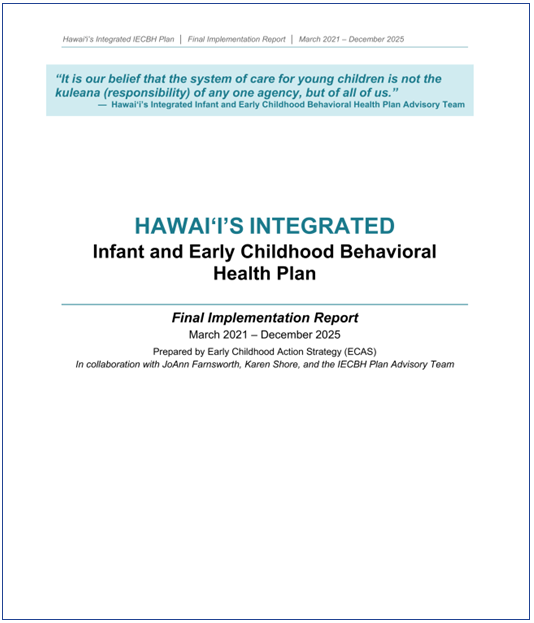
A new final report from Early Childhood Action Strategy (ECAS), Building a Stronger Foundation for Hawai‘i’s Youngest Keiki, looks back at that work, the progress made and what needs to happen next.
The effort began in 2019, when ECAS, the Executive Office on Early Learning’s Early Learning Board and Hawai‘i Community Foundation’s Promising Minds Initiative recognized the need for a statewide plan focused specifically on the behavioral health needs of children from birth to age 5. At the time, Hawai‘i had never had a coordinated plan of this kind.
The result was the Hawai‘i Integrated Infant and Early Childhood Behavioral Health (IECBH) Plan, first completed in 2021. Its goal was not to create another stand-alone program, but to better integrate infant and early childhood mental health and trauma-informed care into the many systems that already serve young children and families. The plan focused on four areas: systems and policy; marketing, outreach and community education; workforce development; and programs and services.
Over the next several years, dozens of organizations and hundreds of individuals from state agencies, community organizations, philanthropy, health care, early learning and advocacy worked together to move that vision forward.
That collaboration has led to meaningful progress. Training opportunities have expanded, helping to strengthen Hawaiʻi’s infant and early childhood mental health workforce. Infant and early childhood mental health has also been incorporated into statewide plans and programs, consultation has expanded into settings such as Home Visiting and Early Intervention, and work to improve reimbursement has helped remove barriers to developmentally appropriate assessment and diagnosis for young children.
Commit to Keiki has been part of this broader effort since 2021, helping bring infant and early childhood mental health into the public conversation. Through public education, media outreach, digital communications, voter education and other efforts, Commit to Keiki has worked to increase understanding of why mental health matters from the very beginning of life and why supporting parents and caregivers is an important part of supporting keiki.
The final report celebrates how far Hawai‘i has come, but it also makes clear that the work is not finished. Priorities for the years ahead include building and retaining a larger infant and early childhood mental health workforce, more fully integrating these practices across systems of care, securing sustainable funding, and continuing public education and outreach to reduce stigma and help families understand and access available support.
The foundation built over the past five years gives Hawai‘i an important place from which to continue. As the report reminds us, supporting the mental health and well-being of young children is not the responsibility of any one organization or agency. It is everyone’s kuleana.
Helping Keiki Have a Safe and Happy Halloween
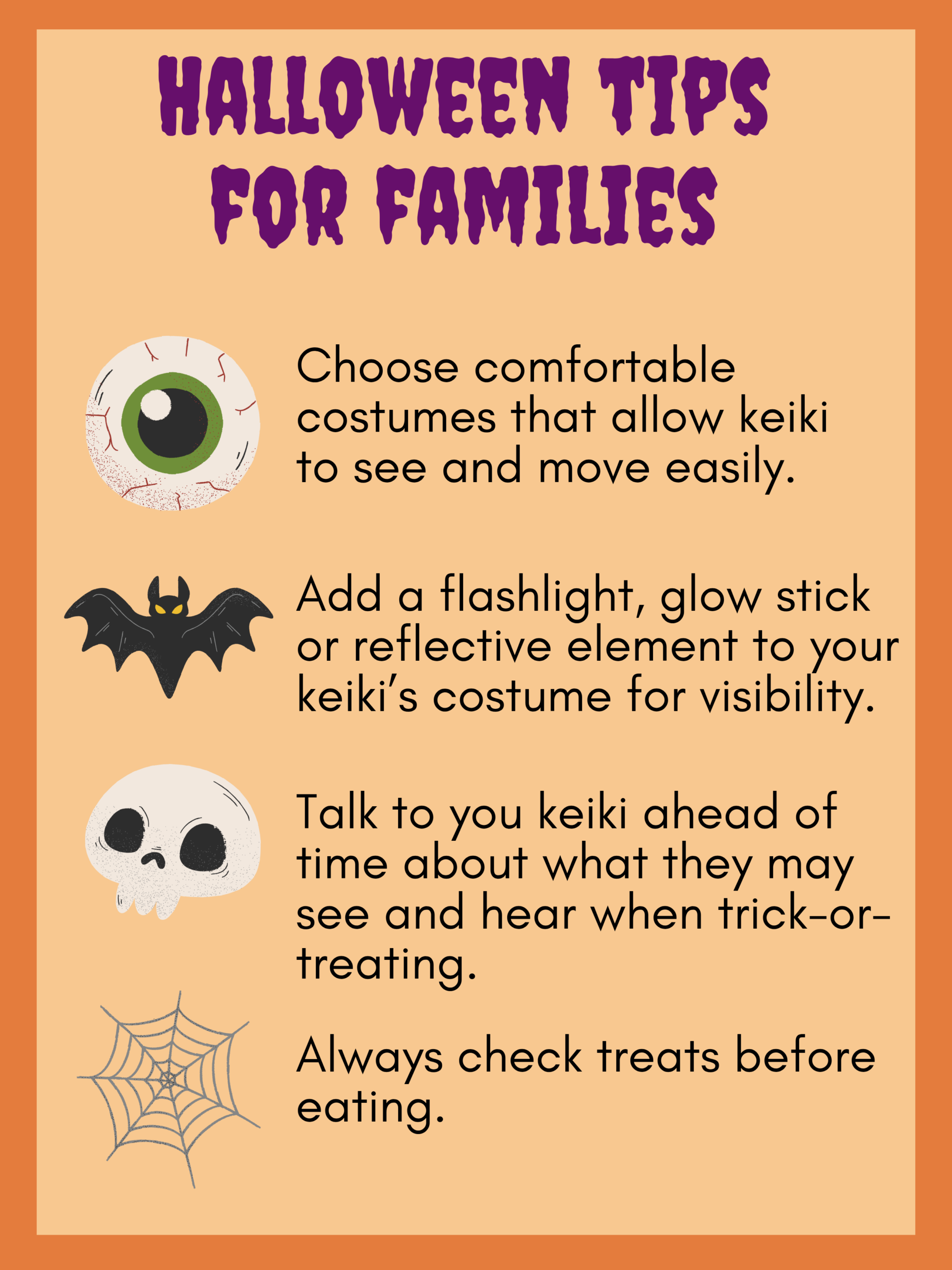
For many keiki, Halloween is one of the most exciting nights of the year. Taking a few simple steps ahead of time can help keep the fun safe and enjoyable for everyone.
Along with the usual reminders about costumes, visibility and checking treats, parents and caregivers can help prepare young keiki for what to expect. Costumes, masks, loud noises, decorations and unfamiliar surroundings can sometimes feel overwhelming, especially for younger children. Talking about the evening ahead of time and following your keiki’s cues can help them feel safe and secure while enjoying the festivities.