
March 2026 Newsletter

Commit to Keiki has been actively tracking the following bills that align with our three priorities – child care and early learning, family violence prevention, and early childhood mental health. With First Crossover now complete, all bills that passed Third Reading in their originating chamber have moved to the other chamber for consideration. Here are the latest updates:
Early Learning (HB2019): Appropriates funds to the Executive Office on Early Learning to administer funding for family-child interaction learning programs..
- STATUS: The measure successfully crossed over from the House to the Senate where it was referred to the Senate Committees on Education and Ways & Means. It is currently awaiting hearing in the Senate Committee on Education.
Early Learning Apprenticeship Program (HB1872): Establishes an Early Learning Apprenticeship Grant Program to be administered by the University of Hawaiʻi to provide financial support for early learning program service providers in the State to participate in state- or federally-approved early learning apprenticeship programs. Requires an annual report to the Legislature. Appropriates funds.
- STATUS: The measure crossed over from the House to the Senate and was referred to the Senate Committees on Education and Ways & Means. The Senate Committee on Education passed an amended version of the bill. It now awaits hearing in the Senate Committee on Ways & Means.


Natasha Perry
Early Childhood Coordinator
Kauaʻi County
Behind every effort to support Hawai‘i’s keiki are champions leading the way. In this series, we spotlight leaders whose work is helping to strengthen the systems that care for our youngest keiki and their families. This month, we are honored to feature Natasha Perry, Kaua‘i County’s newly appointed Early Childhood Coordinator.
Q: What personal or professional experiences have most shaped your commitment to supporting young children and families in Hawai‘i?
A: My commitment to supporting young children and families in Hawai‘i has been shaped deeply by my experiences both as a parent and an early childhood educator (ECE). When I started working at Tutu and Me Traveling Preschool, my older daughter was three, and I quickly realized how much I was learning as a teacher—skills and strategies I could then apply at home. When my second child was born, I noticed how much easier parenting felt because I had tools, knowledge, and confidence to support my own keiki’s growth and learning.
Through my work with Tutu and Me and later with PATCH, I gained firsthand experience navigating resources, subsidies, and educational programs, which showed me how challenging it can be for families to access quality learning opportunities. Raising my children in a Hawaiian immersion school has been an additional learning experience, reinforcing the importance of culturally grounded education and the value of supporting families in ways that honor Hawai‘i’s indigenous language and unique communities.
These experiences have encouraged me to support other families so that all keiki and their ʻohana on Kaua‘i can have the same ease in navigating resources, accessing educational opportunities, and feeling supported in raising their children.
Q: From your perspective, what does a strong, resilient early childhood system look like? What’s at stake if we fail to strengthen it — particularly at the county level?
A: believe a strong early childhood system is one where:
- Families can easily access services without getting overwhelmed by a maze of agencies or eligibility requirements. This includes choices of childcare, subsidies for infant-toddler centers, family child cares and preschools, stable health services, and easy pathways for early intervention. Every family receives a straightforward guide for early childhood education services and child development milestones after delivery of their baby.
- There is sufficient coordination, responsibly shared data, and working relationships between the health services, education services, and social services so families don’t fall through the cracks.
- Early childhood educators and social workers are well-paid and supported with opportunities for professional development so they can remain in the field for many years.
- Every early childhood education program is high quality and culturally grounded.
If we don’t strengthen our systems, our children will be more likely to miss critical developmental windows, which can lead to long-term academic and social challenges. Also, parents may have to leave the workforce due to a lack or unaffordability of quality and reliable childcare (especially childcare for infants). Children might be deprived of educational opportunities because parents couldn’t navigate the system. Talented teachers will be leaving the county because they are not adequately compensated and cannot support their families which in turn will intensify early childhood education workforce shortages which are already present.
Q: Is there a project, program, or initiative you have been involved in —in the past — that you feel represents meaningful progress for young keiki and families? What was its focus, and what impact did it have?
A: Raising my children in Hawaiian immersion education has been one of the most meaningful experiences for our family and community. My daughters attended ʻAha Pūnana Leo’s preschool at Pūnana Leo o Kauaʻi and later continued their learning at Kawaikini New Century Public Charter School. These programs focus on revitalizing the Hawaiian language while grounding students in ʻike Hawaiʻi—Hawaiian knowledge, values, and ways of understanding the world.
For our family, the impact has been deeply personal. My children grew up speaking ʻōlelo Hawaiʻi, learning their history, and understanding their connection to the land, culture, and community. Instead of seeing culture as something separate from school, it was woven into everything they learned—from daily conversations to stories, songs, environmental stewardship, and cultural practices.
Schools like Pūnana Leo o Kauaʻi and Kawaikini NCPCS also bring families together. Parents, kūpuna, teachers, and community members all play a role in supporting the students and the language. It creates a learning environment that extends beyond the classroom and reinforces the idea that education is a shared responsibility rooted in community.
Programs like these demonstrate that culturally grounded education can be incredibly powerful. When children see their language, culture, and values reflected in their learning, it resonates with them in a meaningful way. It not only supports academic growth but also nurtures strong cultural identity, leadership, and a commitment to caring for their community and ʻāina.
Q: In your new role as Kaua‘i County’s Early Childhood Coordinator, what priorities or opportunities are top of mind for you?
A: In my new role as Kauaʻi County’s Early Childhood Coordinator my top priorities are:
- Support availability of affordable quality childcare on Kaua‘i including infant-toddler centers, family child cares and preschools.
- Support early childhood teachers (including family child cares) through fair compensation, professional development, cultural learning and stronger workforce pathways.
- Build collaboration across the early childhood community, including supporting initiatives and groups such as Kaua‘i Early Learning Hui, activities like Kauaʻi Early Childhood Education Conference, and community events and fairs bringing educators, families, and partners together to share knowledge and resources.
- Open our new Pi‘ikoi Youth Center on Kaua‘i complete with an infant-toddler center, after-school fitness and tutoring programs, K-PAL-sponsored activities, as well as cultural programs.
- Build stronger coordination between early childhood providers, schools, health services, and family support programs.
Q: Where do you see the greatest opportunity to strengthen systems that serve Hawai‘i’s youngest keiki and their caregivers?
A: One of the greatest opportunities to strengthen the systems that serve Hawaiʻi’s youngest keiki is by more intentionally supporting the caregivers and teachers who nurture them every day. Early childhood educators and caregivers are the foundation of a child’s development, yet they are often under-resourced, underpaid, and stretched thin. If we truly want better outcomes for our keiki, we must invest in the people who are guiding them through those earliest and most important years. Establishing Early Learning Apprenticeship Program will be a great step towards strengthening the systems that serve Hawai’i’s youngest keiki.

Maui Now, Feb. 26, 2026
Free public Pre-K applications open on March 2
The Garden Island, March 12, 2026
Mayor Derek S.K. Kawakami’s Administration Accomplishments
Civil Beat, March 19, 20256
‘Left To Struggle’: Hawaiʻi Parents’ Long Wait For Paid Family Leave
March is Preschool
Awareness Month
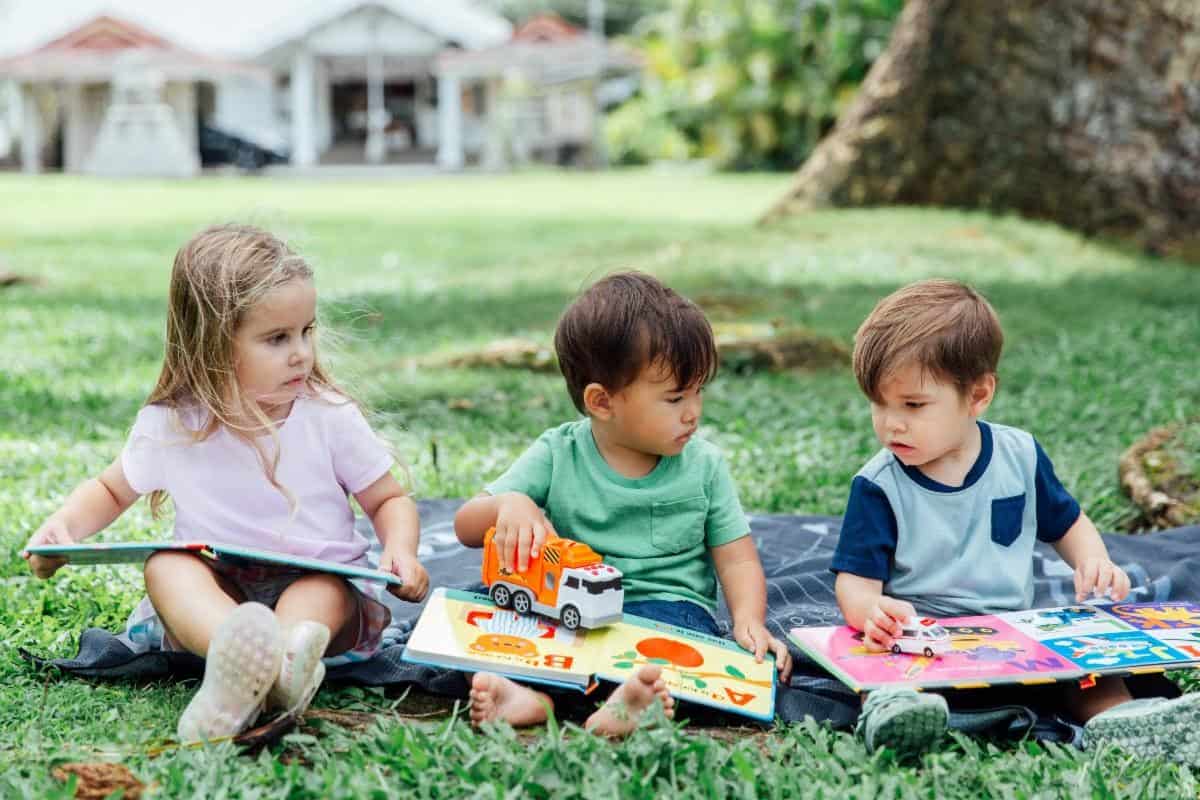
March is Preschool Awareness Month,a time to focus on the earliest years of learning when the foundations for lifelong health, education, and economic stability are formed.
Research consistently shows that early childhood experiences shape brain development and influence outcomes far beyond the preschool years. High quality early learning programs support children’s cognitive, social, and emotional growth, improve school readiness, and are linked to higher graduation rates and stronger long term economic outcomes. Studies show that investments in early childhood programs yield significant long-term returns through increased earnings, stronger workforce participation, and reduced reliance on social services.
For families, access to reliable early learning makes it possible for parents to remain in the workforce and maintain financial stability. For young children, it provides safe, nurturing environments where relationships with caregivers and educators support healthy development and prepare keiki for success in kindergarten and beyond. Yet in Hawaiʻi, access to early learning remains a significant challenge. The state currently has licensed child care capacity for only about one quarter of keiki from birth to age five.
Preschool Awareness Month is an opportunity to recognize the vital role early learning plays in building a stronger Hawaiʻi. By investing in accessible, high quality early learning programs and the workforce that supports them, we can ensure that more keiki enter school ready to succeed and that families have the stability they need to thrive.
Supporting our youngest keiki is one of the most effective ways to strengthen our communities and our economy. When Hawaiʻi invests early, the benefits extend far beyond the classroom and into the future of our state.
Free public Pre-K applications now open!
Families across Hawaiʻi can now apply for the state’s free public prekindergarten program for the 2026–2027 school year. The Executive Office on Early Learning’s (EOEL) Public Pre-K Program serves eligible keiki ages 3 and 4 in the two years prior to kindergarten, providing early learning opportunities during a critical stage of development.
These classrooms, offered in partnership with the Hawaiʻi Department of Education, are located at campuses statewide and focus on nurturing environments where young children build early literacy, social-emotional, and problem-solving skills that support kindergarten readiness.
Applications opened March 2 and are submitted online through the state’s early learning portal. Families may select up to three schools when applying, and priority may be given to children facing certain risk factors or family circumstances. Families interested in applying or learning more about eligibility, participating schools, and enrollment timelines can visit the state’s application portal below.